


In-House Marketing vs. Fractional CMO: How to Choose (A Decision Framework)
August 12, 2026
Fractional CMO for Startups: When It Works, When It’s a Waste of Money
August 17, 2026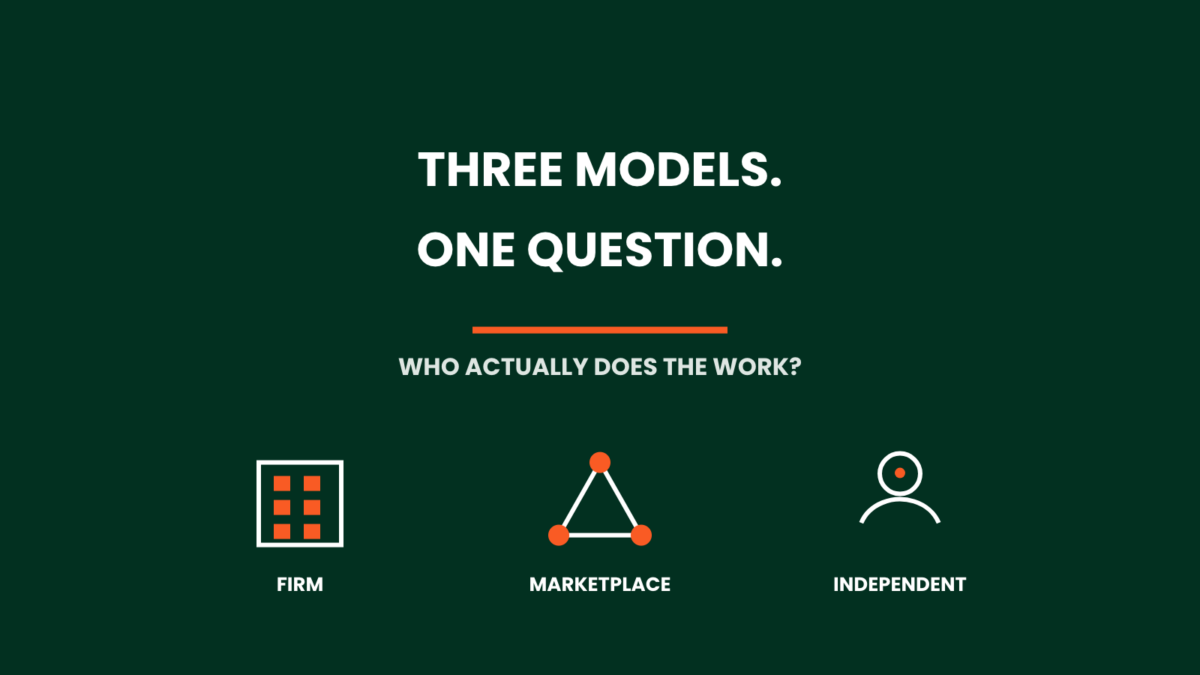
Best Fractional CMO Companies in 2026: How to Compare Them (Without the Hype)
Comparing the best fractional CMO companies starts with the model, not the logo. A candid comparison of fractional CMO companies, marketplaces, and independents, and how to evaluate any of them.
You have a shortlist of six fractional CMO companies open in six browser tabs, and every homepage says roughly the same thing: senior strategy, proven results, flexible engagement. None of them tell you the one thing you actually need to know, which is who on their team will be doing your work.
“Best” is the wrong frame for this decision, because fractional CMO companies are not one category of thing. They are three different business models wearing the same label, and the model matters more than the brand name on the homepage.
Independent research from Gartner's marketing research hub echoes the same pattern seen across the best fractional CMO companies: the operating model matters more than the brand doing the pitching.
The three models of fractional CMO company
The firm or bench model. Fractional CMO firms like Chief Outsiders or CMOx operate a bench of CMOs and assign one to your account. You get institutional continuity and a replacement if your CMO leaves, but the senior person who sold you on the engagement is not always the one who delivers it.
The marketplace or matching model. Platforms like Growtal match you with an independent fractional CMO from a vetted pool, similar to how a staffing marketplace works. You get selection and speed, but the matching platform takes a cut of the rate, and quality control varies by who happens to be available.
The independent practitioner. A single fractional CMO working solo, without a firm's overhead or a marketplace's matching fee. You get direct access to the person actually doing the thinking, but no bench to fall back on if the fit is wrong or their capacity is full.
Narrowing the best fractional CMO companies to a real shortlist starts here. Compare these three on five dimensions: who actually does the work, continuity if that person leaves, total cost, depth of specialization in your specific industry, and whether any conflict of interest exists between what they recommend and what they sell.
How to compare fractional CMO companies: 8 criteria
Score every option you're considering against these eight criteria before you take a single sales call seriously.
These criteria apply whether you are comparing the best fractional CMO companies on a shortlist or vetting a single name a colleague recommended.
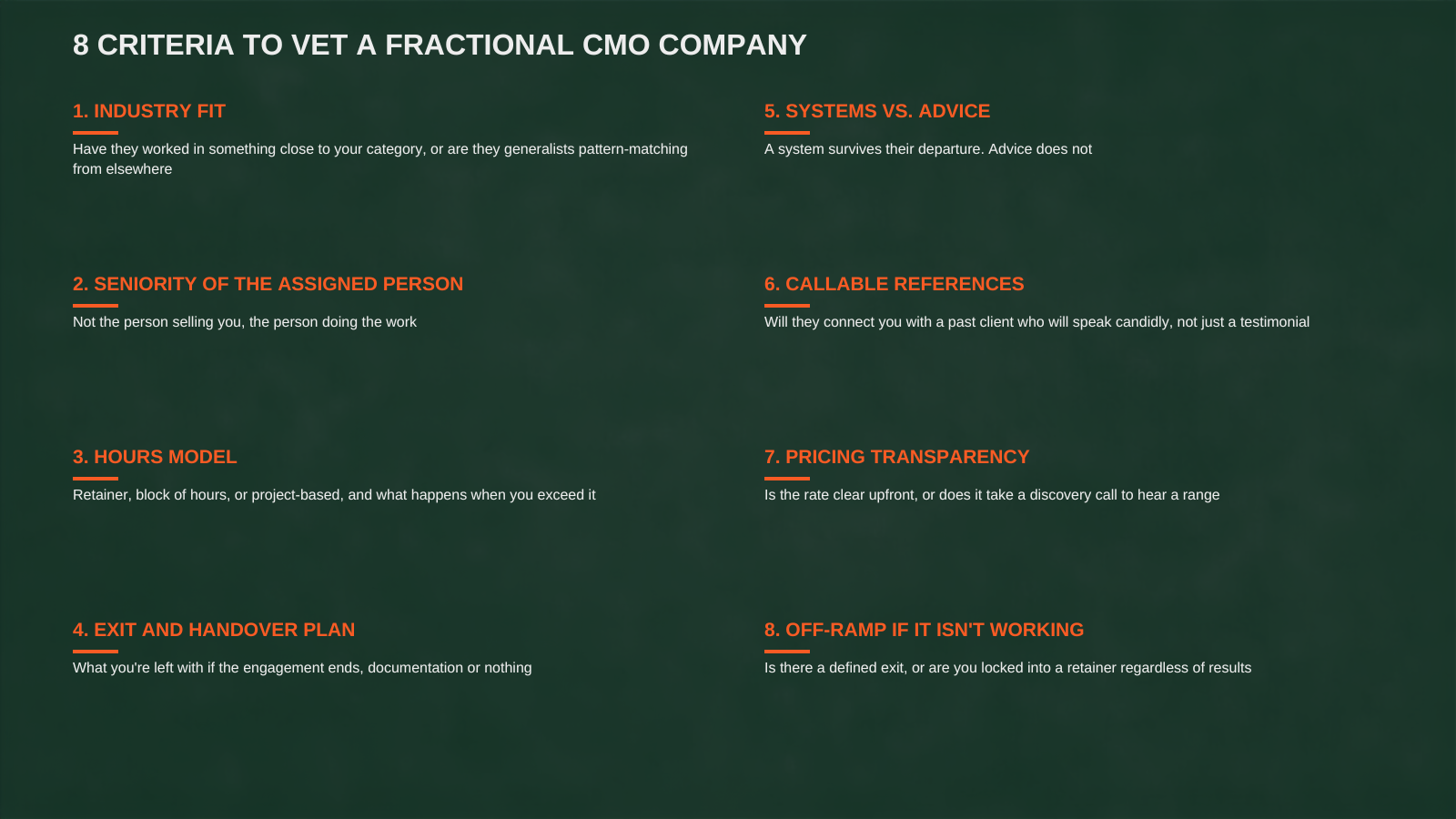
| Criterion | What to look for |
|---|---|
| Industry fit | Have they worked in something close to your category, or are they generalists pattern-matching from elsewhere |
| Seniority of the assigned person | Not the person selling you, the person doing the work |
| Hours model | Retainer, block of hours, or project-based, and what happens when you exceed it |
| Exit and handover plan | What you're left with if the engagement ends, documentation or nothing |
| Systems vs. advice | A system survives their departure, advice does not |
| Callable references | Will they connect you with a past client who will speak candidly, not just a testimonial on their site |
| Pricing transparency | Is the rate structure clear upfront, or does it require a discovery call to even hear a range |
| Off-ramp if it isn't working | Is there a defined exit, or are you locked into a retainer regardless of results |
The bait-and-switch check
Even among the best fractional CMO companies, this question separates the ones worth calling back. Here is a question almost no comparison article will tell you to ask, because most of them are written by the firms themselves: “Will the person I'm speaking with right now be doing the work, or will I be handed off after signing?”
In bench models specifically, the person who runs the sales conversation is frequently a senior partner whose job is closing, not delivering. The CMO you're actually assigned might be excellent, or might be someone several levels more junior than the person who impressed you on the call. Ask the question directly, and ask for the name and background of the specific person before you sign anything.
What no fractional CMO company will tell you
This holds true even for the best fractional CMO companies on any shortlist, because the limitation is structural, not a matter of individual skill.
A fractional CMO plugged into a business with no underlying growth system becomes an expensive firefighter. They spend their limited hours reacting to whatever is broken that month instead of building anything that compounds. This is true regardless of which model you choose, and no vendor selling you the engagement has an incentive to mention it.
The businesses that get the most value from a fractional CMO are the ones that already have, or are simultaneously building, the operational foundation the strategy needs to run on. See how that foundation comes together in our Growth Architecture system.
Common mistakes when comparing fractional CMO companies
The most common mistake is shortlisting the best fractional CMO companies by homepage polish rather than by asking who specifically will touch the account. A well-produced website says nothing about whether the assigned person has ever worked in your category.
A second mistake is skipping the reference check because the sales process feels thorough enough already. A confident sales conversation is not evidence of delivery quality. Ask for a reference who will speak candidly, and treat any hesitation as an answer in itself.
A third mistake is picking based on price alone. Among the best fractional CMO companies, the cheapest option is often cheapest because it is a marketplace match with no bench behind it, or a generalist stretched across too many accounts to give yours real attention. Compare total value, not just the monthly rate.
Typical pricing across models
Pricing among the best fractional CMO companies varies by model. Firm and bench models typically run $6,000 to $15,000 monthly, reflecting the overhead of the bench and account management layer. Marketplace-matched independents typically run $4,000 to $10,000 monthly, with the platform's fee built into the rate. Direct independent practitioners typically run $3,500 to $9,000 monthly, varying most by the individual's seniority and demand.
Who each model is genuinely best for
| Model | Best for | Weakest for |
|---|---|---|
| Firm/bench | Continuity and a replacement guarantee | Buyers who want direct access to the most senior thinking |
| Marketplace | Speed and a vetted pool to choose from | Buyers who want zero platform markup on the rate |
| Independent | The most senior person doing the actual work | Needing bench depth if that person is unavailable |
Questions to ask on the first call
Ask who specifically will be assigned to your account, by name. Ask what happens contractually if that person leaves or becomes unavailable. Ask for one reference you can call without the vendor present. Ask what they would need from your business in the first thirty days to be effective, since a vague answer here often predicts a vague engagement.
FAQs
A few quick answers on the best fractional CMO companies before you make any calls.
What are the best fractional CMO companies?
“Best” depends on which model fits your situation. Compare the firm, marketplace, and independent models against your own priorities rather than searching for a universal answer.
How much do fractional CMO companies charge?
Ranges vary by model when you compare fractional CMO services, roughly $3,500 to $15,000 monthly. Marketplace models typically include a platform fee on top of the practitioner's base rate.
Is a fractional CMO firm better than an independent?
Firms offer bench depth and continuity. Independents offer more senior, direct attention. Neither is universally better; the trade-off depends on what you value more.
How do I vet a fractional CMO company?
Use the eight criteria above, and especially confirm who will actually be doing the work before you sign anything.
Fractional CMO vs. marketing agency?
A fractional CMO decides. An agency delivers. Most businesses eventually need both, but confusing one for the other is a common and expensive mistake.
You do not need to find the single best fractional CMO company. You need a decision rule that tells you which model fits your situation, and eight questions that separate a real engagement from a well-produced homepage.
One last note on evaluating the best fractional CMO companies: the same eight criteria apply whether you found the name through a referral, a directory, or a cold outreach email. Do not let the source of the introduction lower your bar for the vetting itself.
Before you sign anything, put the best fractional CMO companies you are considering through the same short test: ask for a reference client at your exact stage, ask what specifically did not work with a past client, and ask who on their team will actually touch your account week to week. The best fractional CMO companies answer all three without flinching.
Not all of the best fractional CMO companies are a fit for every stage of company, and that is fine. The point of comparing the best fractional CMO companies is to find the one whose model matches your problem, not the one with the biggest name.
When you shortlist the best fractional CMO companies, weight the reference calls more heavily than the pitch deck. The best fractional CMO companies will happily connect you with a past client at your size.
Price alone does not separate the best fractional CMO companies from the rest. What separates the best fractional CMO companies is whether the person on the account has actually run your category before.