


How to Diagnose Low-Quality Leads Before You Change Anything
November 4, 2026
Vanity Metrics vs Actionable Metrics: What to Track and What to Ignore
November 13, 2026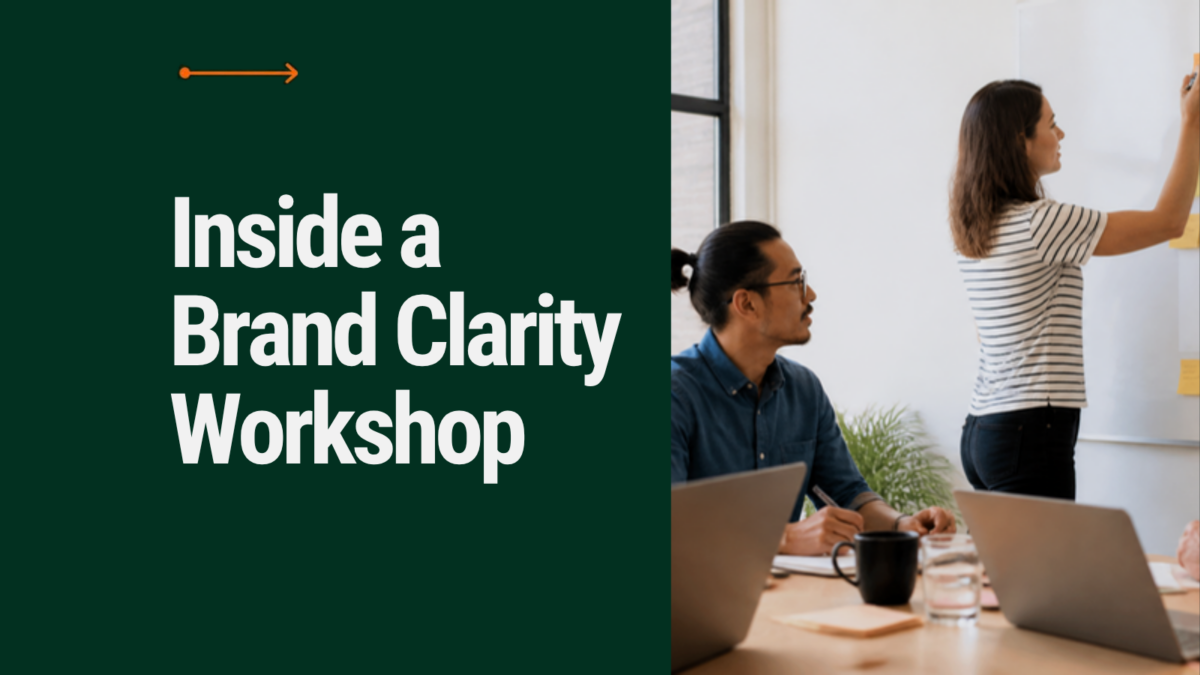
Brand Clarity Workshop: Deliverables, Process, and Outcomes
A brand clarity workshop is a structured working session in which a business’s leadership agrees, in writing, on who it serves, what problem it solves, why customers should choose it, and how it should describe itself. The main deliverables are usually a positioning statement, a messaging framework, and a shared description of the ideal customer that the whole team can use.
The value is not the session itself. It is the decisions the session forces, and whether those decisions are based on evidence or on the opinions in the room.
Why Businesses Look for a Brand Clarity Workshop
The trigger is rarely a branding project. It is usually a pattern of small inconsistencies. The founder describes the business one way on sales calls, the website says something broader, and the newest team member explains it differently again. Each version is reasonable. Together they make the business harder to understand and harder to choose.
That inconsistency is visible to buyers. In a June 2025 Gartner survey of 632 B2B buyers, 69% reported inconsistencies between the information on a company’s website and the information its sellers provided (Gartner, 2025). Gartner noted that this kind of mismatch can create mistrust. For a small business, where the founder, the website, and a few team members are the entire brand, the effect is concentrated.
A workshop is a way to resolve those versions into one.
What a Brand Clarity Workshop Should Deliver
Providers package this work very differently, so judge a workshop by its outputs rather than its name. A useful one should leave the business with written decisions in four areas.
The first is the ideal customer definition: a description of the buyer you are best placed to serve, specific enough that the team can recognize them and turn others away. The second is a positioning statement that names the problem you solve and the reason to choose you over the realistic alternatives, including doing nothing. The third is a messaging framework, the core message, the supporting points, and the proof behind each, so that the website, sales conversations, and content draw from the same source. The fourth is a short list of decisions about what to stop saying, which is often more useful than the new language.
Visual identity, logos, and color palettes are sometimes bundled in. They are a separate piece of work. If a workshop spends most of its time on visuals, it is a design project, not a clarity project.
How the Process Usually Works
Before the session
The quality of a workshop depends on what is brought into it. The most useful preparation is customer evidence: notes from recent sales conversations, the reasons clients gave for choosing you, the objections that keep repeating, and the words customers use to describe their problem. The Buyer Hesitation Interview Guide is one structured way to gather it.
During the session
The working session moves from customer to position to message, in that order. Teams that start with taglines usually end up debating wording before they have agreed on who the wording is for. A good facilitator keeps the discussion on decisions and records the reasoning behind each one, not only the conclusion.
After the session
The outputs are only useful once they are applied. That means rewriting the homepage and service pages, briefing anyone who creates content, and giving the sales conversation the same language. The One-Page Marketing Strategy Worksheet is a practical way to keep the decisions in one place.
Workshop, Diagnostic, or Identity Project: Which Do You Need?
A workshop is the right tool when the team already has a reasonable understanding of its customers and needs to agree on and articulate it. It is the wrong tool when nobody is sure why customers buy, because a room of informed opinions will simply produce a confident version of an untested assumption.
| Brand clarity workshop | Research-led diagnostic | Brand identity project | |
|---|---|---|---|
| Main question | How do we agree on and describe who we are? | Why is our marketing underperforming, and what do customers actually value? | How should the brand look and feel? |
| Primary input | Leadership knowledge plus available customer evidence | Customer research, market analysis, performance data | An agreed positioning |
| Typical outputs | Positioning statement, messaging framework, ideal customer definition | Findings on customers, positioning, and growth constraints, with priorities | Logo, visual system, brand guidelines |
| Best when | The team knows its buyers but describes the business inconsistently | Growth has stalled and the cause is unclear | The strategy is settled and the visuals no longer fit |
The order matters. Identity work built on unclear positioning tends to need redoing. Workshop outputs built on assumptions tend to read well and convert poorly. When the uncertainty is about customers rather than language, the Marketing Clarity Intensive is designed as the research-led first step, and the workshop decisions follow from its findings. ALG Dynamics’ guide to consumer psychology in marketing explains why buyer reasoning so often differs from what a team assumes.
If your team knows its customers but describes the business in several different ways, the Strategic Marketing and Brand Clarity program is designed to build that shared understanding. It covers positioning, audience understanding beyond demographics, and messaging grounded in buyer psychology.
Explore Strategic Training ProgramsWho Should Attend
Keep the group small and include the people who make or carry the decisions: the founder or owner, whoever leads sales conversations, and whoever produces the marketing. Someone who talks to customers every day, such as an account manager or front-desk lead, often contributes the most useful evidence. More than six or seven people usually turns decision-making into negotiation.
Frequently Asked Questions
What is a brand clarity workshop?
A brand clarity workshop is a facilitated session in which a business’s leaders agree on who they serve, what problem they solve, why customers should choose them, and how to describe it consistently. The outputs are usually a positioning statement, a messaging framework, and an ideal customer definition.
What happens in a brand strategy workshop?
A brand strategy workshop typically moves from customer understanding to positioning to messaging. Participants review evidence about current customers, define the buyer the business serves best, agree on its distinctive value, and translate that into core messages. A good session records the reasoning behind each decision, not only the result.
How long does a brand workshop take?
Formats range from a half-day session to several sessions spread over a few weeks, depending on the provider and the scope. Preparation and follow-up often take more time than the session itself. Gathering customer evidence beforehand and applying the outputs afterward determine most of the value.
Who should attend a brand workshop?
Include the people who make and carry the decisions: the founder or owner, whoever leads sales, and whoever produces marketing. Add someone with daily customer contact if possible. Keeping the group to around six or fewer helps the session reach decisions instead of compromises.
Is a brand workshop worth it for a small business?
A brand workshop is worth it when the team understands its customers but describes the business inconsistently. It is less useful when the uncertainty is about why customers buy at all. In that case, customer research or a marketing diagnostic should come first, so the workshop builds on evidence rather than assumptions.
Where This Leads
Brand clarity is less about finding better words than about making decisions the business has been avoiding. Who you are not for is usually the hardest one.
If your team is also working out how AI fits into its marketing decisions, ALG Dynamics’ guide to AI literacy training for teams covers how to choose a program that builds shared judgment rather than tool familiarity.
If three people on your team described your business today, how many different answers would you hear?